


Programs
Upskill
3-month training for career growth
Sprint
2-week practical training for business impact

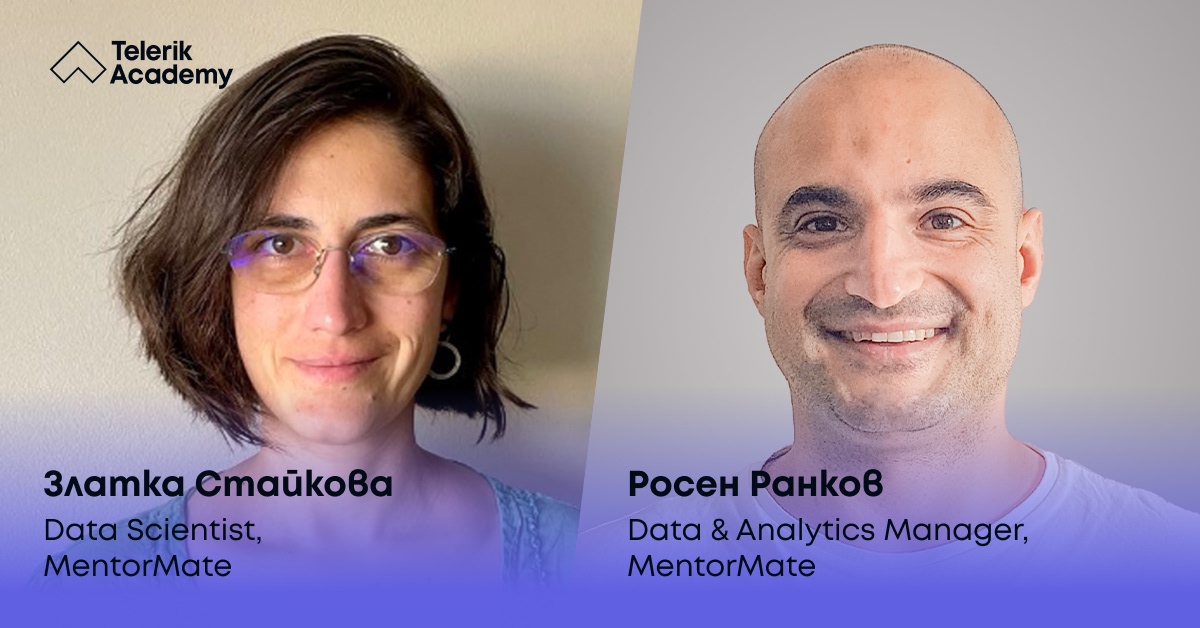
Rosen:
This is my third year in a row as a lead trainer, and I know it won’t be easy, but the satisfaction at the end of the program is incredible. Seeing how people grow in just three months, how far they’ve come, what they’ve learned… that’s priceless.
Why Telerik Academy? I get strong support to make it happen; excellent candidate selection, and I work with people who truly want to learn. We grab drinks together, exchange ideas, and sometimes we even discover future colleagues for our team. In this business, trust and responsibility are everything.
What I love most is how open the learners are: they ask questions, share their experiences, and genuinely want to dig deeper into the world of data. The program isn’t run by me alone. It’s built on the collective expertise of an entire data team. We’re perfectly synchronized, and the lectures and exercises are structured professionally.
Zlati:
Teaching has always attracted me. Even in the academic world, I assisted my advisors in training new students. I believe the path to a better world goes through constant, uncompromising learning.
And guiding someone through the “scary world” of statistics, then seeing them come out curious, confident, and enriched — that’s a wonderful feeling. So when Rosen invited me to join, I didn’t hesitate for a second. I didn’t even need to sleep on it! I was ready to jump in the very next day.
Rosen:
Successful data analysts will be able to “talk” to the data. As a colleague of mine says: “I look at the data, and keep looking… until it tells me what I need to hear.”
It’s not about choosing between business and technical skills. It’s about having the right combination and knowing the tools that allow you to uncover and deliver business value. Top analysts will be strong in cutting-edge technologies, AI, and understanding business needs. These are the people who don’t just analyze data, but they help organizations make better decisions.
Zlati:
The timeless qualities: collegiality, good manners, curiosity (yes, I’m repeating myself, but uninterested people simply don’t belong in this field), and the ability to listen.
A huge part of our job is translating the language of business into numbers. If you can truly understand the business need behind the question, you’ll learn how to express it in the language of data. That’s it.

A practical guide to Python for beginners: what it is, what it's used for, why it's the most accessible first programming language, and how to write your first working code. Includes a realistic timeline for going from zero to job-ready.
Read the story
Creating a successful product isn’t just about writing requirements or designing beautiful screens. A product manager is the person who translates user needs into real solutions. Find out more about the uniqueness of the role in our conversation with Nikolay Kazmin - CTO of Domestina.
Read the story
Learn why mastering JavaScript, embracing AI tools, and developing strong soft skills are essential to stand out in Bulgaria’s fast-growing tech industry. Gain practical insights and see how Telerik Academy’s Alpha JavaScript program helps you turn these skills into a real career.
Read the story

